CUÉVANA
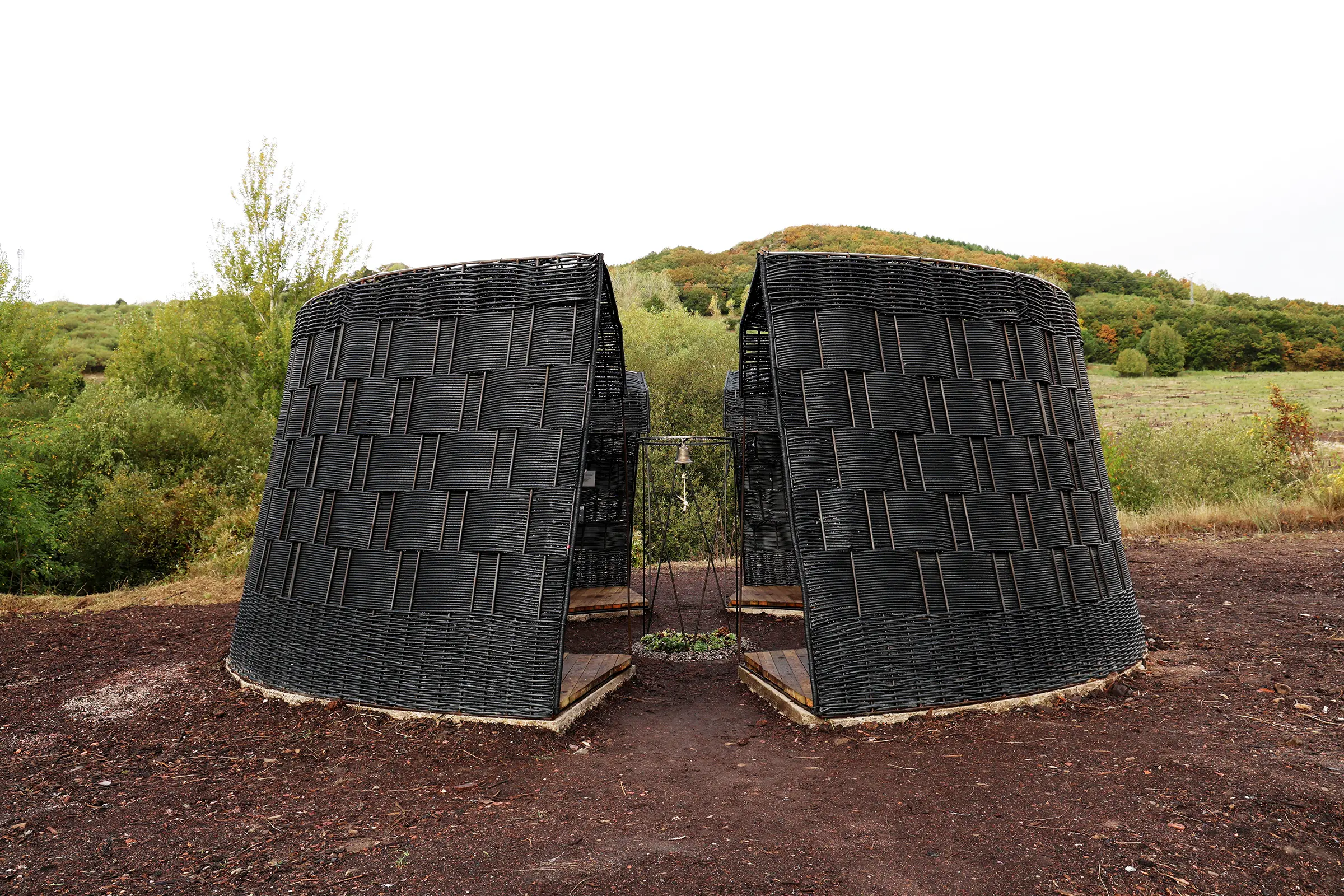
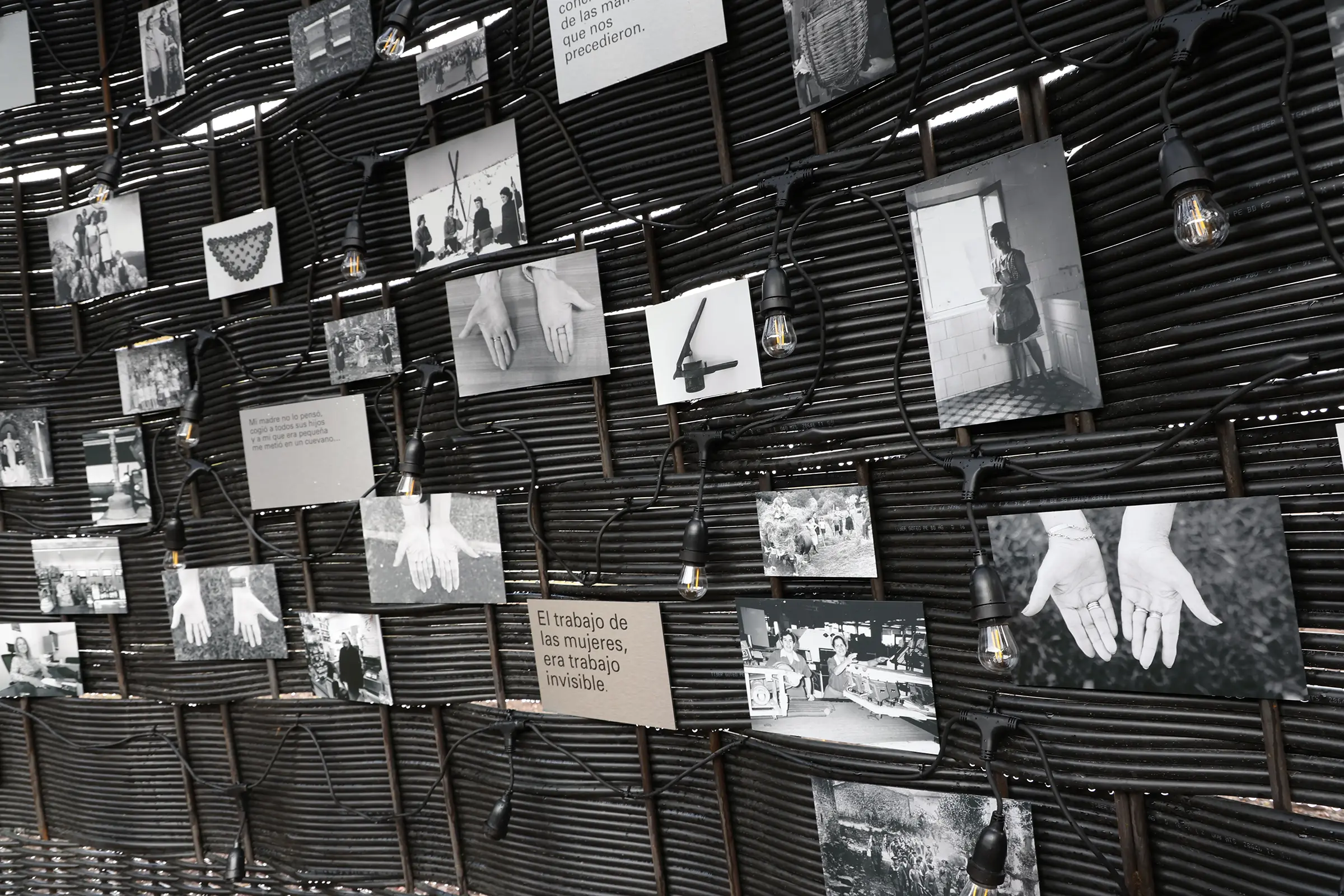
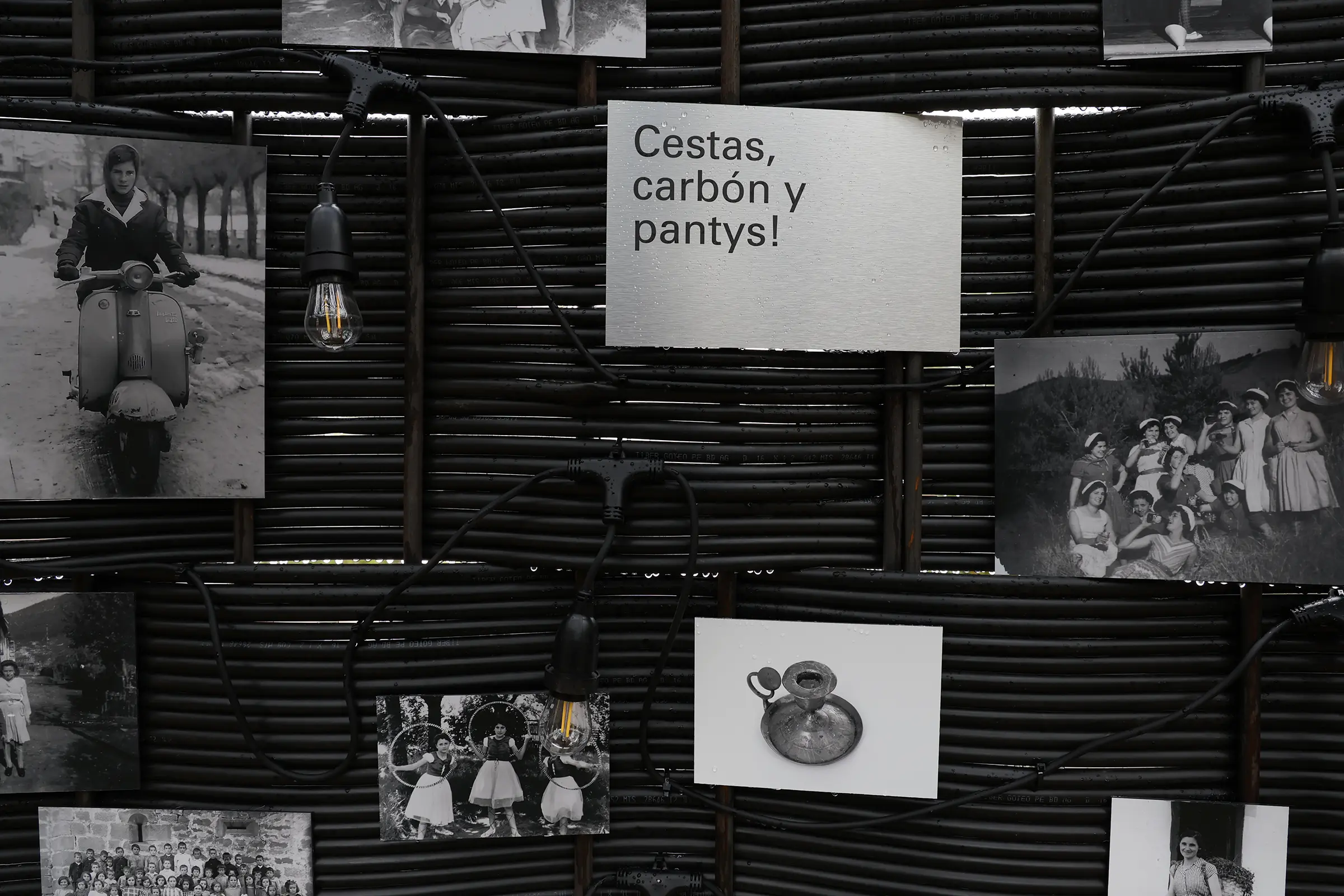
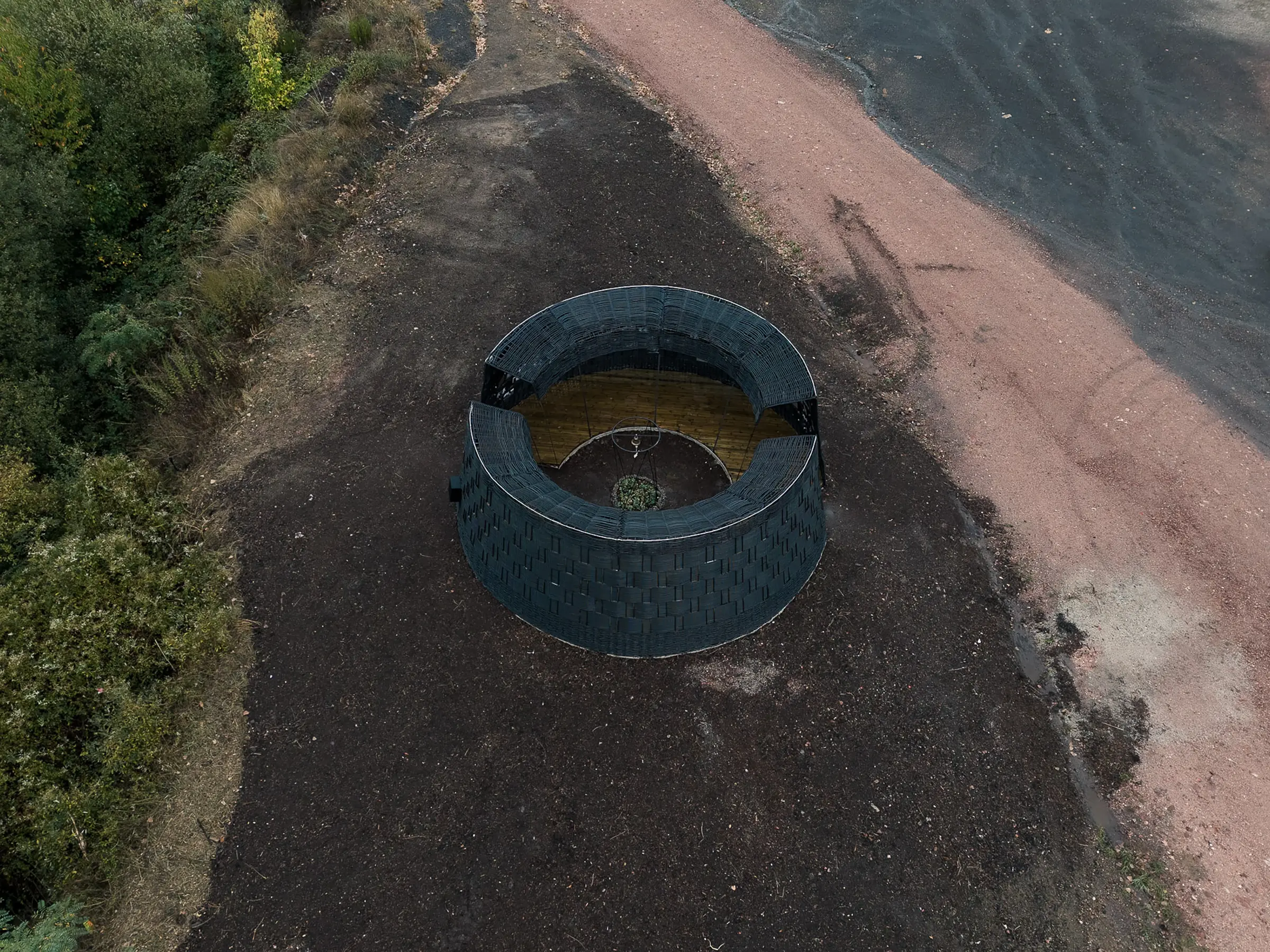
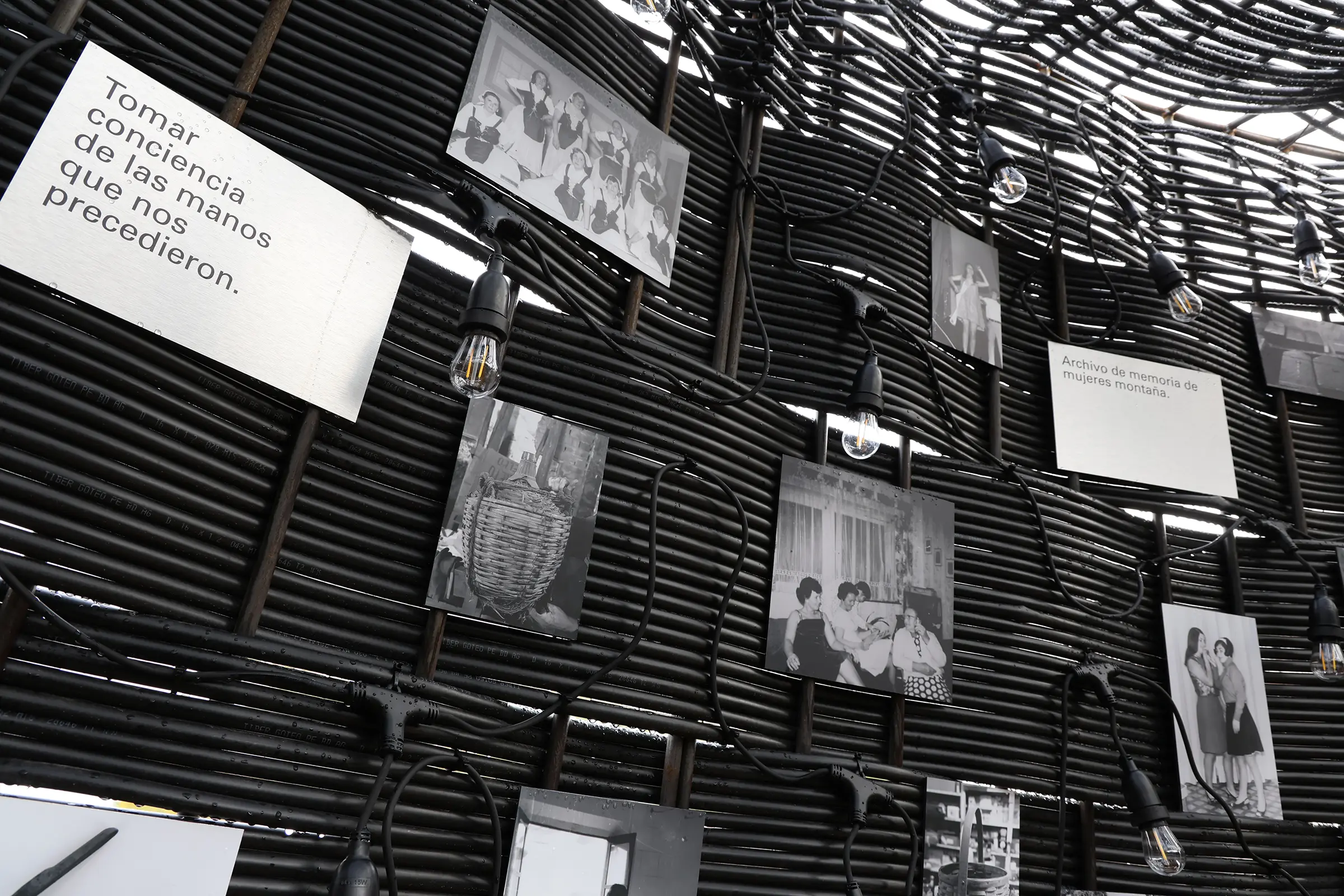
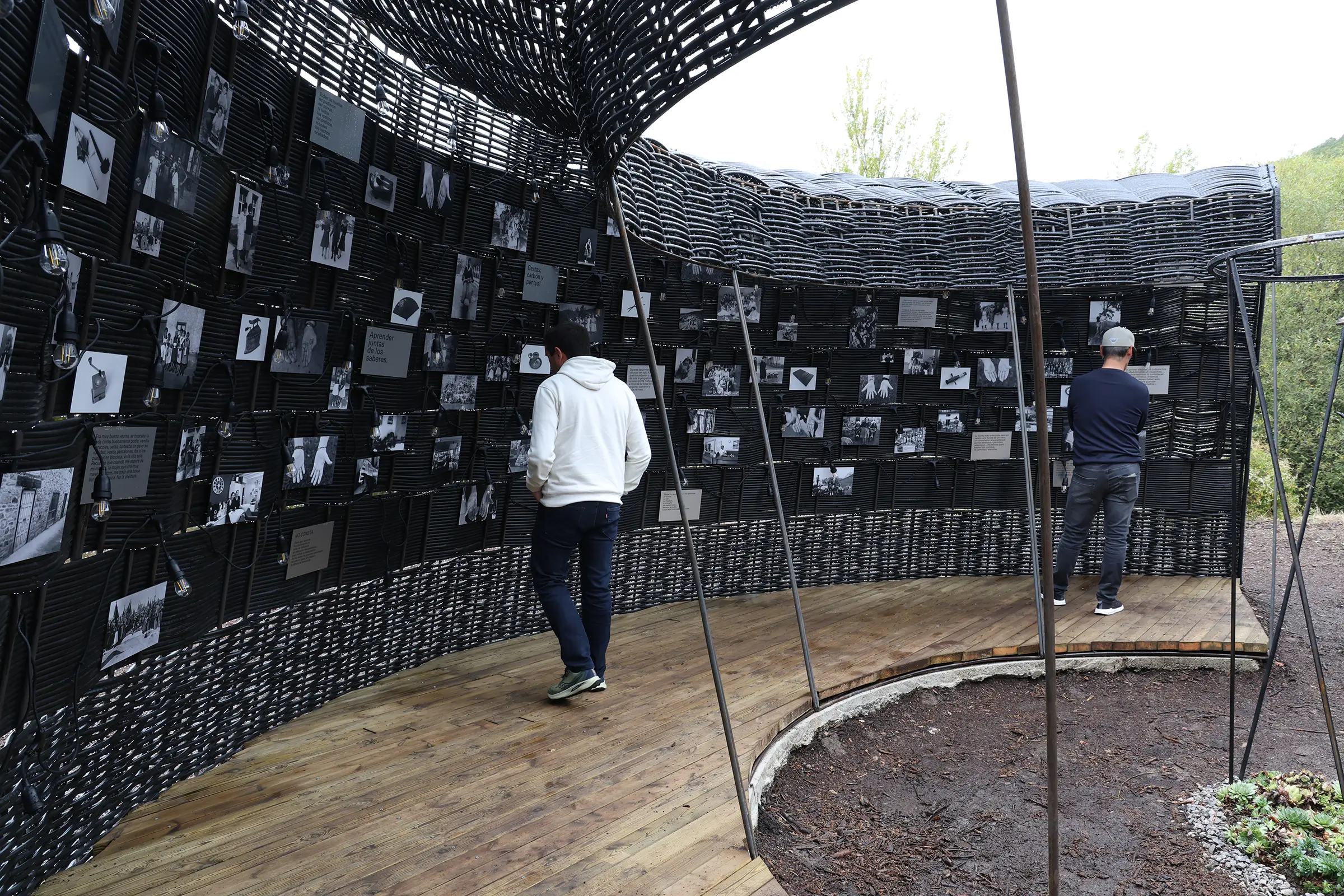
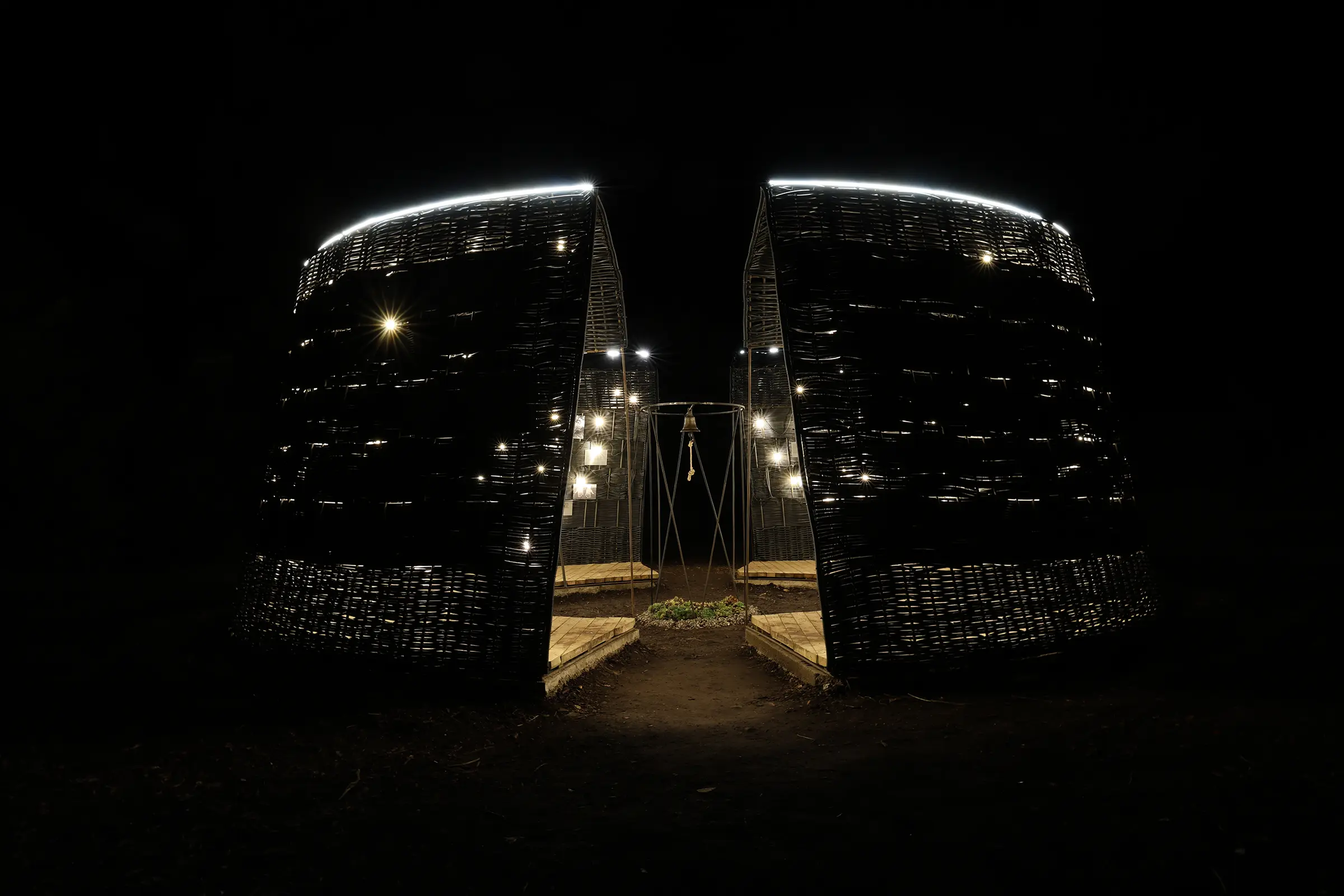
Instalación escultórica de 8 metros de diámetro, realizada en hierro, tejida en manguera de riego. Contiene fotografías de archivo, registros fotográficos realizados por Todo por la Praxis, textos e iluminación LED.
Instalación artística y dispositivo cultural de memoria que surge de un proceso de investigación y creación colectiva junto a un grupo de mujeres de Barruelo de Santullán, un territorio marcado por la extracción minera del carbón. A través de encuentros, conversaciones, recorridos e intercambios de fotografías y objetos, fuimos reuniendo relatos sobre las formas de vida que se organizaron alrededor de la mina y las experiencias de las mujeres que han quedado desplazadas de la memoria colectiva.
Ubicada en la antigua escombrera, la pieza toma como referencia el cuévano, un canasto tejido que las mujeres utilizaban para recoger carbón, madera y otros materiales necesarios para sostener la vida. La feminización de su nombre introduce un gesto de reparación conceptual que atraviesa toda la obra. En diálogo con «La teoría de la bolsa de la ficción» de Ursula K. Le Guin, CUÉVANA recupera los gestos de recoger, contener, transportar y sostener para disputar el relato minero históricamente masculinizado.
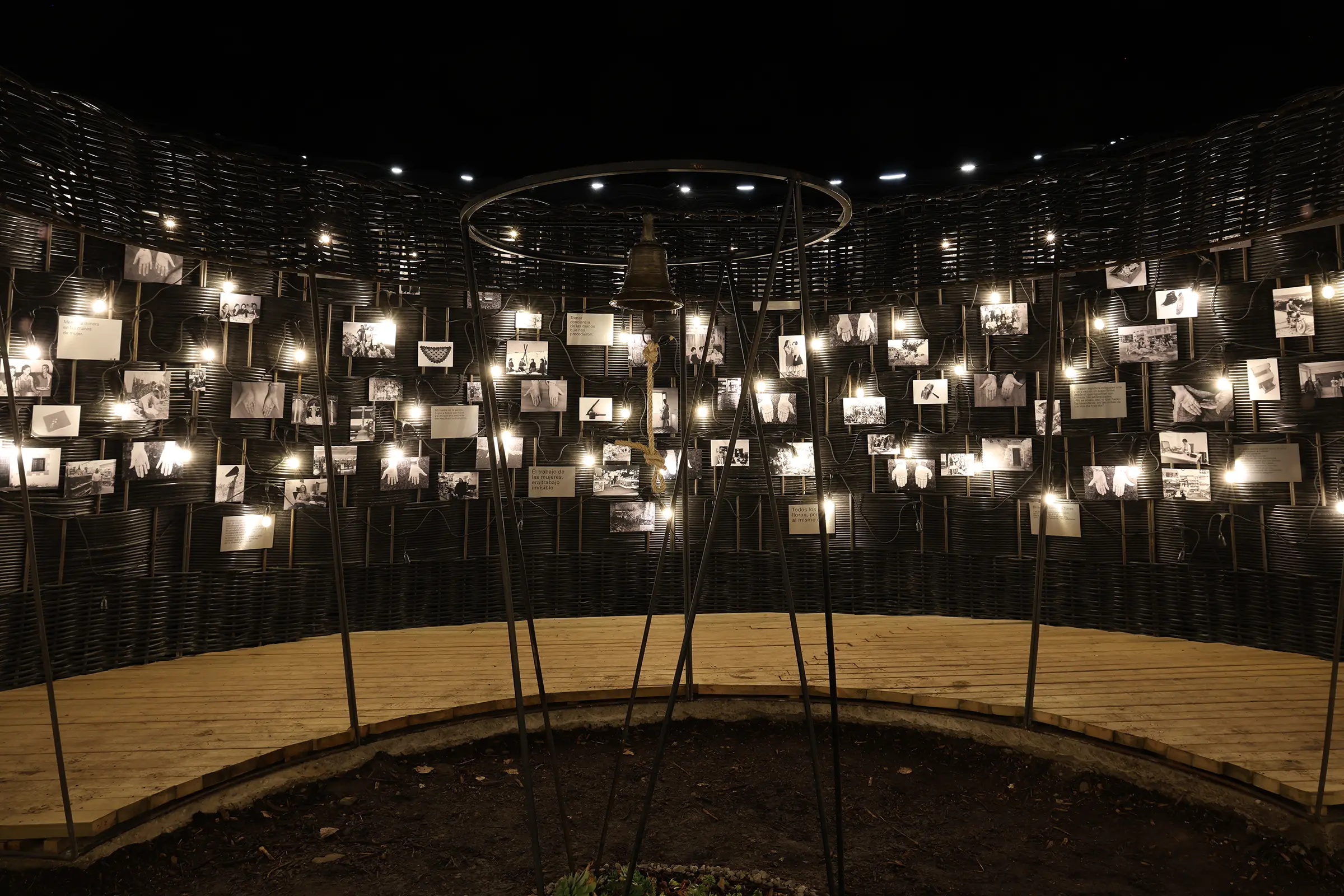
La instalación consiste en una estructura circular de ocho metros de diámetro, construida en hierro y tejida colectivamente con manguera de riego por goteo. Su construcción prolongó los encuentros y las conversaciones que dieron origen al proyecto. Concebida como un espacio transitable, en su interior una serie de fotografías iluminadas con luz cálida y textos suspendidos de la estructura tejida acompañan el recorrido circular, que funciona también como lugar de encuentro.
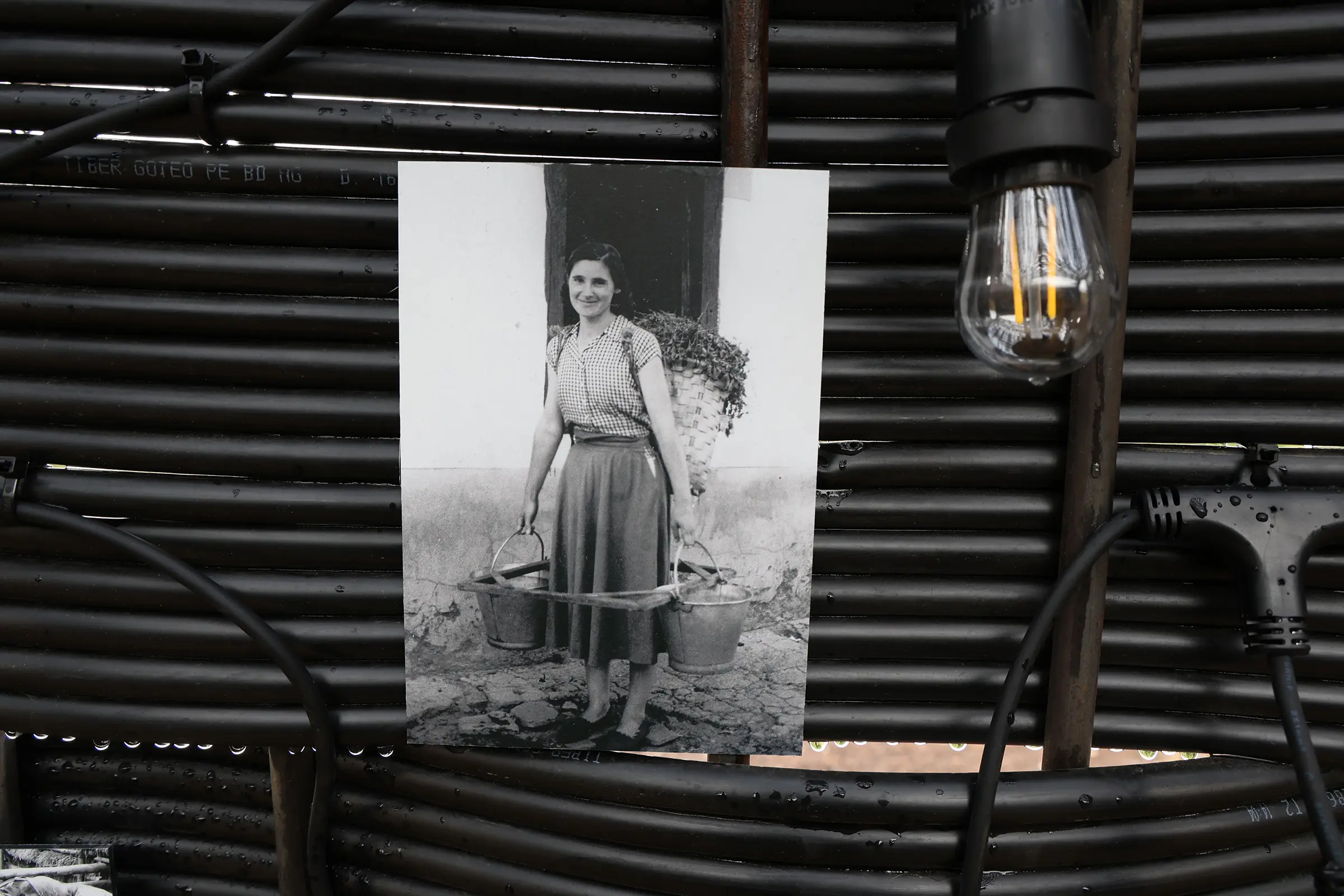
Los contenidos se organizan en cinco estratos que abordan la posición política de las mujeres, el trabajo, los cuidados, el goce y la transmisión de memoria cultural. Fotografías de archivos familiares y del archivo de Barruelo, imágenes de objetos conservados, retratos de manos y registros de oficios contemporáneos se articulan con frases surgidas del proceso y fragmentos de textos de Ursula K. Le Guin y de «Cuando la supervivencia se convierte en resistencia», de C. García, M. J. Prieto y R. Díez.
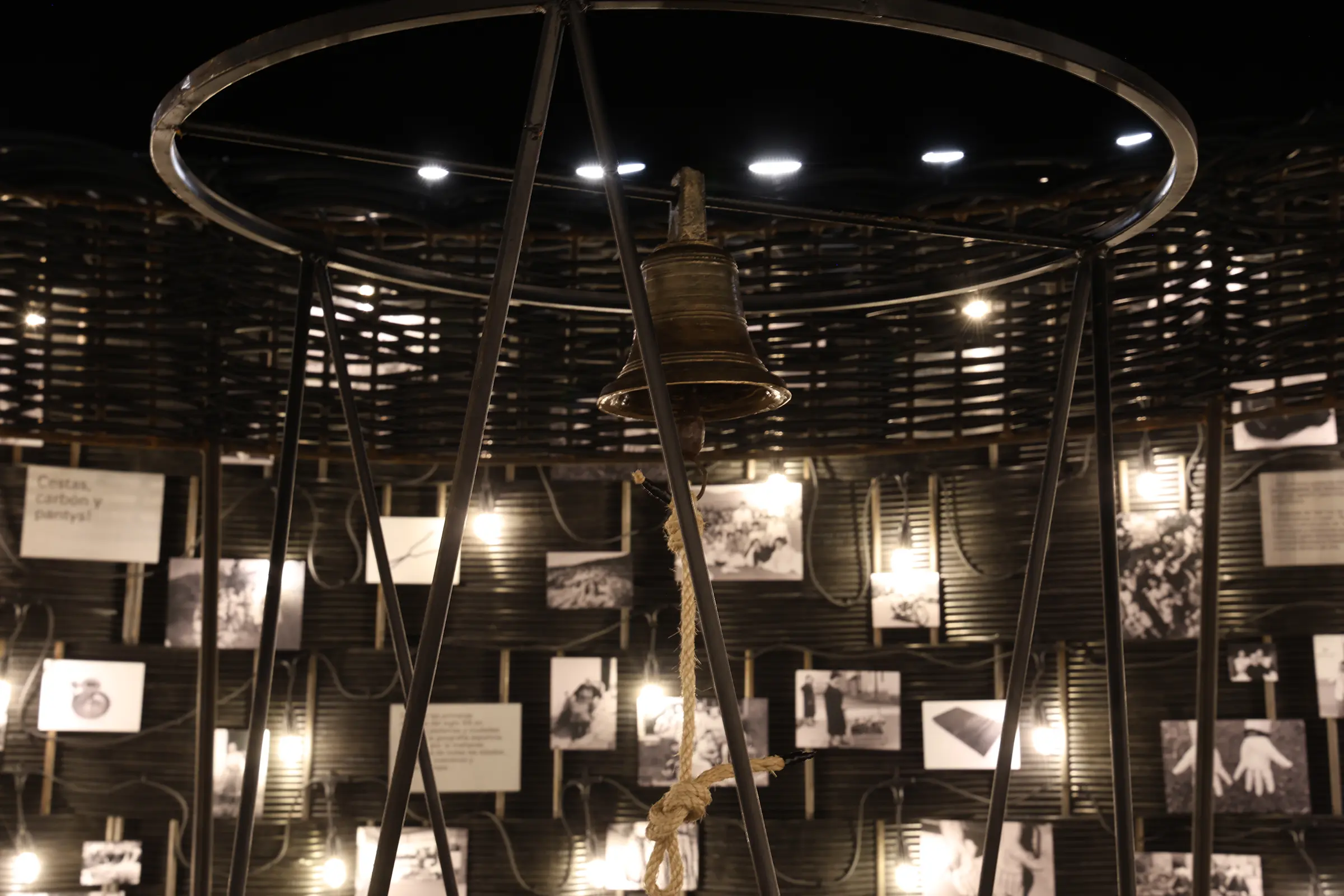
Una campana recupera la memoria sonora de aquella que desapareció hace un tiempo, y que avisaba cuando alguien del pueblo debía atravesar la mina, entonces situada en el centro de la comunidad.
La obra propone una restitución simbólica de la memoria de las mujeres y de su papel en la construcción social, cultural y política del territorio. Esta intervención se pregunta qué otra historia aparece cuando aquello que había quedado fuera del relato dominante ocupa el lugar que le ha sido negado.
El proyecto ha sido impulsado por Concomitentes, mediado por Alfredo Escapa Presa, en el marco del proyecto europeo Art Living Lab – Secuelas energéticas.
CUÉVANA
A sculptural installation 8 metres in diameter, made of iron and woven from garden hose. It features archive photographs, photographic records produced by Todo por la Praxis, texts and LED lighting.
An art installation and cultural memorial arising from a process of collective research and creation alongside a group of women from Barruelo de Santullán, a region shaped by coal mining. Through meetings, conversations, tours and the exchange of photographs and objects, we gathered stories about the ways of life that organised themselves around the mine and the experiences of women who have been displaced from the collective memory.
Located on the former spoil heap, the piece takes its cue from the ‘cuévano’, a woven basket that women used to collect coal, wood and other materials necessary for sustaining life. The feminisation of its name introduces a gesture of conceptual reparation that runs through the entire work. In dialogue with Ursula K. Le Guin’s ‘The Theory of the Fiction Bag’, CUÉVANA reclaims the acts of gathering, containing, transporting and sustaining to challenge the historically masculinised narrative of mining.
The installation consists of a circular structure eight metres in diameter, constructed from iron and collectively woven using drip irrigation hose. Its construction extended the meetings and conversations that gave rise to the project. Conceived as a space that can be walked through, inside it a series of photographs illuminated by warm light and texts suspended from the woven structure accompany the circular route, which also functions as a meeting place.
The content is organised into five layers addressing women’s political position, work, care, pleasure and the transmission of cultural memory. Photographs from family archives and Barruelo’s archive, images of preserved objects, portraits of hands and records of contemporary trades are interwoven with phrases emerging from the process and excerpts from texts by Ursula K. Le Guin and from ‘When Survival Becomes Resistance’ by C. García, M. J. Prieto and R. Díez.
A bell recovers the auditory memory of the one that disappeared some time ago, which used to sound a warning when someone from the village had to cross the mine, then situated at the heart of the community.
The work proposes a symbolic restoration of women’s memory and their role in the social, cultural and political construction of the territory. This intervention asks what other story emerges when that which had been left out of the dominant narrative takes the place that had been denied to it.
The project was initiated by Concomitentes, facilitated by Alfredo Escapa Presa, as part of the European project Art Living Lab – Energy Aftermaths.